Rekonstrukcja wypadku
statku powietrznego
TU154M, o numerze
bocznym 101
18-12-2020
Opracował:
Dr Gerardo Olivares
NIAR AVET Laboratories
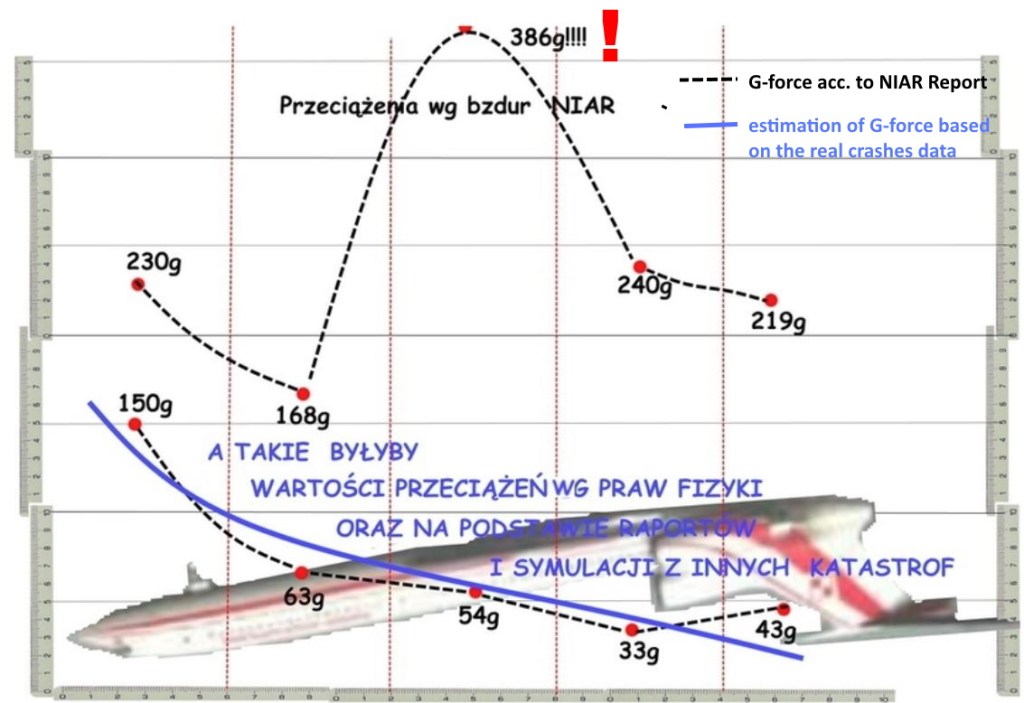
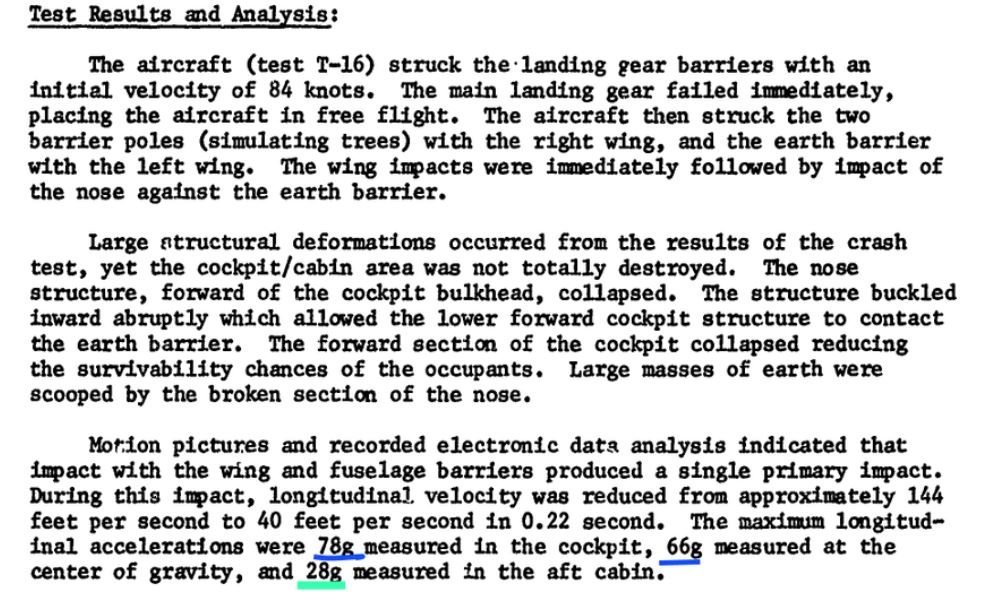
NIAR made a major error in estimating the magnitude of deceleration forces along the fuselage resulting from the aircraft’s impact with the ground. While the MAK report estimated these forces at approximately 100g, NIAR reports values as high as 386g — and this is at the floor level! However, in an inverted position, the floor would be located farther from the initial impact point, and a significant portion of the impact energy would have been absorbed in the process of crushing and tearing the fuselage structure.
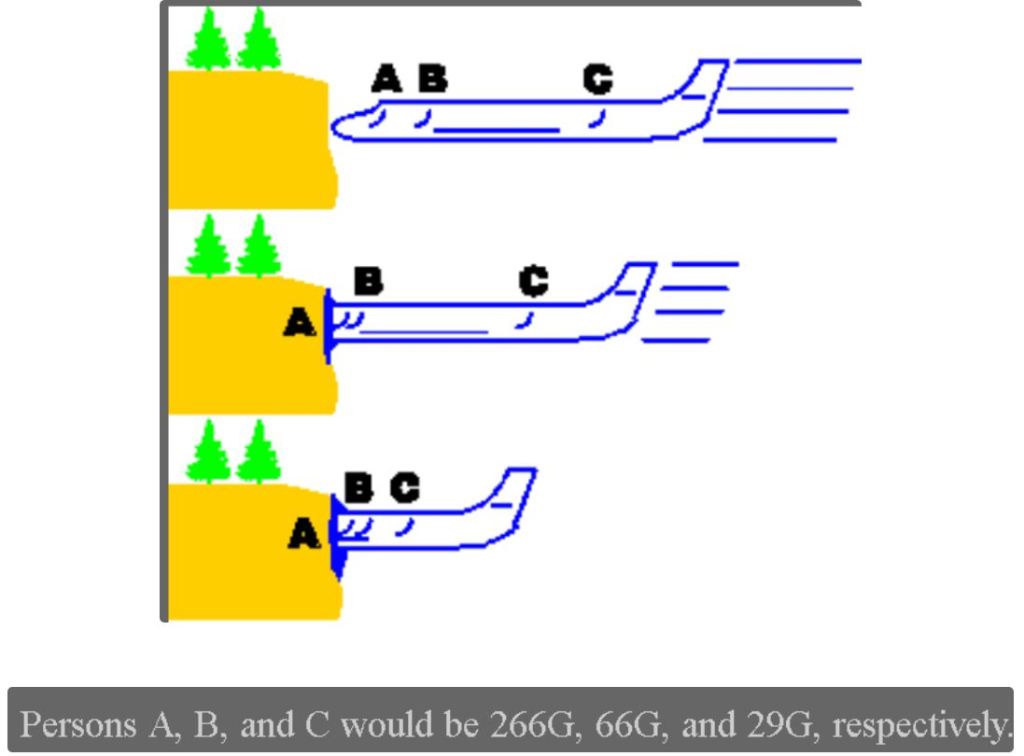
It is also worth noting that in many CFIT-type crashes, the rear section of the fuselage often remains intact — including the doors, which, although difficult to open, are still operable. This implies — when translated into the language of physics and material strength — that the deceleration forces in the aft part of the fuselage did not exceed roughly 20g. This is logical and consistent with real-world experience: in the case of a long fuselage, the deceleration forces during a crash decrease progressively along its length and are lowest at the very rear — especially when the aircraft impacts the ground nose-first and at a downward angle.
hoenix Aviation Flight 702P, on a domestic flight, registered 7T-VEE, was a Boeing 737…collided with power transmission cables and a pylon during its final approach to Coventry Airport in the United Kingdom…struck the gound in inverted position…

Even if the aircraft had impacted a vertical rock wall head-on — at the same speed as in Smolensk — the deceleration forces in the rear section of the fuselage would still be significantly lower.

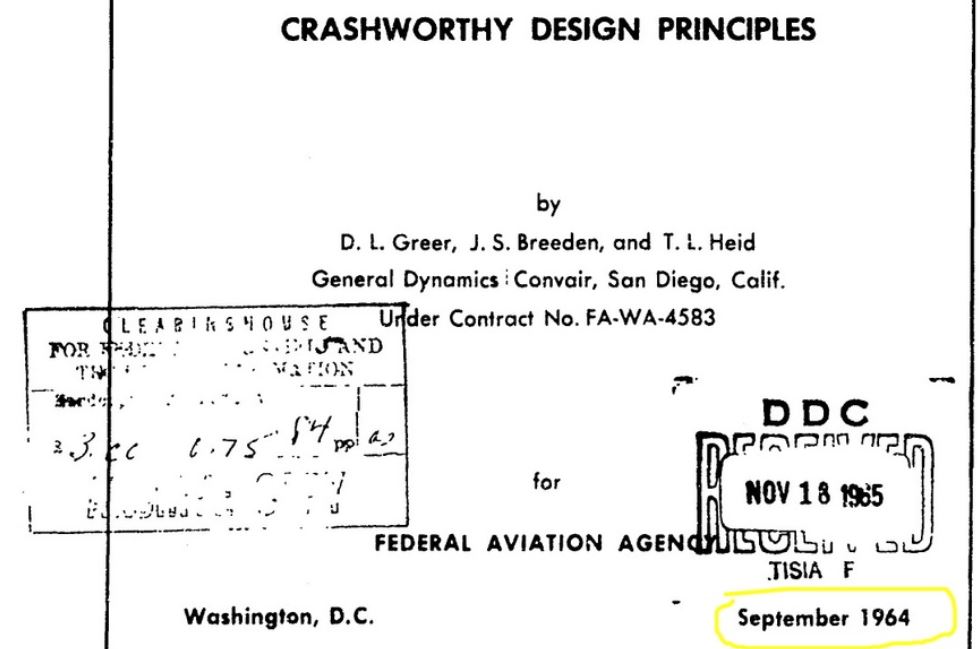
60 years ago, it was done better;
people were wiser…
 Tytuł witryny
Dodaj komentarz