At the given in MAK Report impact parameters, the K3-63 recorder would have survived with only minor damage — especially in the case of an inverted crash, since it is mounted in a compartment in the aircraft’s floor, and such a compartment acts as an additional kind of safety cage.

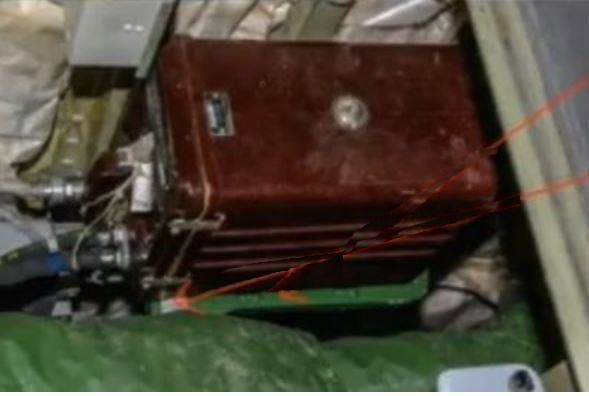
I have already provided several examples of crashes with significantly more severe impact parameters, in which the K3-63 recorder survived
Such a recorder would have easily withstood a CFIT-type impact like the one described in the MAK Report…
…especially considering that it actually did survive that crash!

At the impact site, a crater was formed with the following dimensions: 33.8 meters in length and 3 meters in depth.The airplane was completely destroyed, yet..Not only was the analog recorder K3-63 found, but its data was also successfully retrieved!
Although the tape was torn, the recordings of in-flight g-forces were recovered, ranging from +1.5g to –2g.
According to the MAK report, the casing of the K3-63 recorder was „not found.” .
But that is, of course, a lie — because the casing of the K3-63 recorder even survived a crash in which the aircraft impacted the ground at a speed of 950 km/h!
Crash of the Tu-124 plane nearby Dnepropetrovsk in 1970.

The Russians hid the recorder because it records data mechanically on tape — it cannot be manipulated the way magnetic tape data can.
 Tytuł witryny
Dodaj komentarz